Babies Can Learn a Great Deal If We Believe in Them
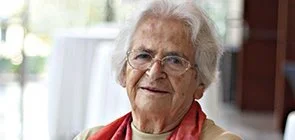
Anna Tardos, one of the most renowed specialists in early childhood education.
To talk about Anna Tardos is to talk about the foremost expert in early childhood on the planet — the guardian of principles nearly a century old but still revolutionary today about infant development. Ideas that began to take shape through her mother, the Austro-Hungarian pediatrician Emmi Pikler (1902–1984). During a trip to the beach, the doctor was surprised by the number of parents who sat their young children up, even when sitting was not yet a natural position for them. She also noticed that adults spent the day encouraging children to walk and trying to distract them. This kind of action, she thought, only reinforced dependence.
“What if, instead, adults started recognizing babies’ competencies?” she asked. This was how the pediatrician began developing an approach centered on fostering autonomy. The first beneficiary of these ideas was Tardos herself — born in 1931 — and then the war orphans from World War II who were cared for at the shelter Pikler directed.
Today, Tardos carries on her mother’s legacy in refining the so-called Pikler approach, adopted by early childhood education institutions around the world. During a visit to Brazil, where she gave a series of lectures organized by the Brazilian Pikler Network, the researcher sat down with Nova Escola to discuss the fundamental principles of the approach and the challenges and resistance that still exist to its adoption in daycare centers and preschools.
What were the most important discoveries made by your mother, Emmi Pikler?
ANNA TARDOS As today, in the 1930s there was research on how children learned, primarily in preschool and elementary school. But few of those investigations applied to babies. The age group up to 3 is a completely different universe. Emmi Pikler was the first to look carefully at this age and discover capabilities in babies that were previously unknown. She saw that babies can develop on their own in certain areas, discover the world by themselves and learn. Because we are used to seeing only their dependence — after all, a newborn cannot survive without an adult — we don’t see this. She not only identified these competencies but also created practical recommendations for their development.
What are the principles of the Pikler approach?
I would say there are four, equally important. The first is respect and trust in the child’s capabilities. In that sense, we should not force a child to stand or sit if those are not positions they have achieved on their own. A baby can learn a great deal if we believe in them and respect their pace. The second principle is to carry out care in a respectful way, treating the child as a partner, observing and enabling their active participation. I see many babies who are handled with quick movements, who aren’t looked in the eyes and who aren’t invited to interact and genuinely participate in diaper changes, feedings or baths. The third principle is a watchful eye on the child’s health and physical well-being — aspects fundamental to their development. The fourth is relating to young children in a positive and non-prohibitive or punitive way. They grow up constantly hearing “Don’t do that!” but there are other, more respectful ways to teach rules.
How do you avoid that constant “no”?
Let’s say a girl wants to touch a cup on the table. If I simply say no, she might back away but return shortly after. If I move the object out of her reach, she understands she shouldn’t touch it. That way, we help the child contain her impulses. Children of 18 months or 2 years have a need to explore and end up doing “forbidden” things — the fact is, if the child cannot touch something, the object shouldn’t be within reach. When that doesn’t happen, a struggle begins. Adults scold, insist that something is forbidden until they lose patience. This socialization process can happen smoothly. The relationship with babies should be free from these forms of violence. Self-regulation is a difficult task that must be taught with the child, not against them. When we allow it, young children learn to regulate themselves through movement.
How do these principles, created for families, apply to educational institutions?
Pikler observed that children in their families generally develop well, even if the care is not guided by the principles of the approach she created. The same does not happen in daycares or shelters. That is because the contact with young children can be full of small acts of violence. If someone holds the child roughly or performs care hastily without considering what the child is communicating through their gestures, the baby feels it and protests: they cry and move to try to prevent the diaper change. In families, children manage to develop and grow well despite this, because they feel that the adults there care about them and love them. When they are not being cared for by relatives or close people, the situation is different: being in a group — something that is not natural for this age — and having few moments of exclusive attention, and therefore few genuine exchanges between adult and child, are stress-causing situations that can compromise the development and health of babies.
How can schools balance attention to care and education?
At first, daycares were places where babies were simply kept. The institution’s role was to keep them clean, fed and safe. At another point, people began to believe that they should also educate — and that was a gain. After Pikler, we see no difference between these two things. I observed here in Brazil educators who play with young children, take them out to explore the garden, and spend the day saying: “This is a flower, this is a family, this is an animal.” At diaper-changing time, there is an aide who performs that task, as if educating and caring were unrelated. Education is in the details, and it begins precisely in these moments of caregiving. When an adult says “Now I’m going to pick you up,” the child looks, prepares themselves and lets themselves be held. That is learning. All of this requires major changes in the structure of institutions serving children of this age, to ensure they are not rushed through or fed simultaneously. In short, that their time and individuality are respected.
Is there a lot of resistance to Pikler’s ideas?
Yes, because the principles of the approach go completely against tradition. Educators come to lectures, hear us out and leave unsettled, thinking: “I’ve been doing this work for 20 years, I have good intentions, and suddenly someone is telling me that what I do isn’t good!” What I say is that we want a cultural change — a shift in the way we view the relationship with the child. We say that adults should not sit babies up, pick them up carelessly, or basically do whatever they want with them. That causes frustration. When we say that educating in a daycare is not about showing babies where their nose or mouth is, educators get uncomfortable. “If I can’t teach, then what did I study early childhood education for?” they ask. The role of the educator is to plan the environment and propose a space that allows children to explore and develop. That may seem simple, but it is a great challenge — something that can take a very long time to learn.
Originally published by Nova Escola. April 2016.
Reporter: Wellington Soares
Original URL: novaescola.org.br/conteudo/8592/o-bebe-pode-aprender-muito-se-acreditarmos-nele